Books

Unveiling history,
one story at a time

José L. Bolívar holds a Doctor of Philosophy (Ph.D.) from the Department of History of the University of Puerto Rico. He has published six books—both in English and Spanish—on Puerto Rico’s military, economic, social, and political history, as well as its relations with the United States and neighboring Caribbean nations. His historical research and writing extended beyond Puerto Rico to Cuba, where he examines the life of Federico Pérez Carbó and his involvement in Cuba’s war of independence.

The Caribbean Front in World War II

The Caribbean Front in World War II 

This compelling book challenges the conventional view that World War II was not fought in the Americas. At the height of German submarine warfare in 1942, Caribbean waters saw the sinking of nearly one oil tanker or merchant ship per day.

Reviews & Press

“World War II scholars have relegated the region to a footnote. It should not be so … this well-written and well-researched historical narrative.”
Hispanic American Historical Review · August 2022Harry Franqui-RiveraRead the review
“The most complete examination to date of the Nazi submarine campaign in the Caribbean and its effect on the various societies of the region … a must-read for anyone working on the twentieth-century Caribbean.”
New West Indian Guide · March 2022Geoff BurrowsRead the review
“It is likely that no other historian has brought together in one place such a wealth of information on what, in the greater scheme of WWII events, was probably a sideshow, but an important one.”
The Naval ReviewAdmiral Sir Nigel EssenhighRead the review
“He has done an exemplary job of delivering lively details involving the little-known Caribbean Front of the Second World War.”
The Northern Mariner · November 2021Eric WibergRead the review

“After reading this book, we will no longer be able to see the Caribbean in the same way.” — Jorge Ramos, Award-winning anchor at Univision and bestselling author

“A compelling narrative based on contemporary newspapers, doctoral dissertations, and primary archival sources.” — César J. Ayala, UCLA, author of Puerto Rico in the American Century

“Outstanding research … a riveting narrative.” — Jorge Rodríguez Beruff, University of Puerto Rico

Fundador de la República: Federico Pérez Carbó y sus combates por la independencia de Cuba

Fundador de la República: Federico Pérez Carbó y sus combates por la independencia de Cuba

Federico Pérez Carbó is a prominent figure in the history of the Cuban Republic. His revolutionary activities began with the military campaigns against the Spanish Crown and continued nearly up to the start of the 1959 Revolution. He coordinated most of the key expeditions that supplied the Liberation Army with weapons, provisions, and personnel. He later served as governor of Oriente Province and was a committed advocate for preserving the history of Cuba’s independence.
Island at War: Puerto Rico in the crucible of the Second World War

Island at War: Puerto Rico in the crucible of the Second World War

Island at War is a collection of ten thoroughly researched and illustrated articles by leading historians, sociologists, political scientists, and journalists. Contributors hail from institutions such as the University of California, Los Angeles; Columbia University; the University of Puerto Rico; the University of the West Indies; and Whittier College. Together, they examine the impact of the Second World War on Puerto Rico from multiple disciplinary perspectives.
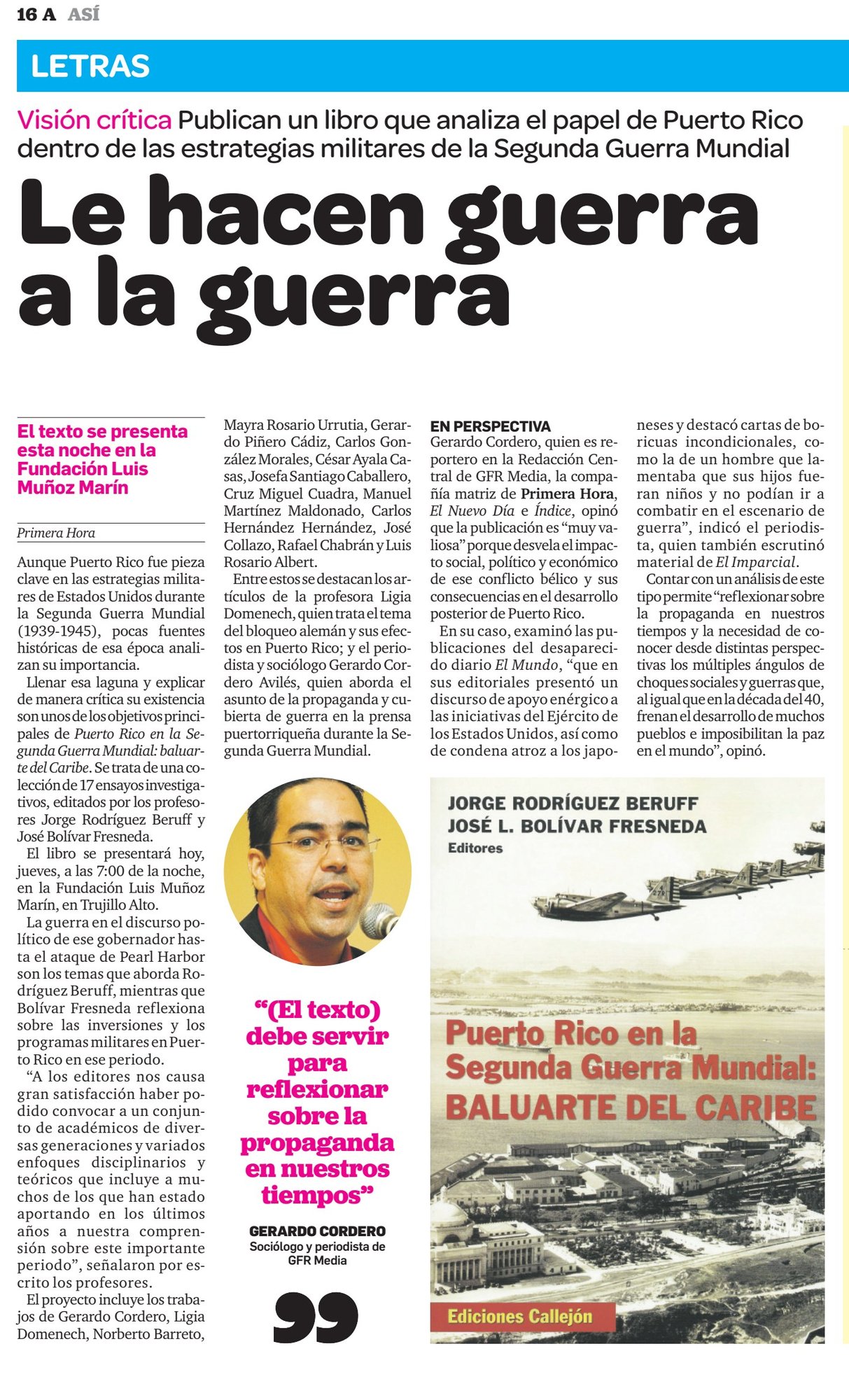
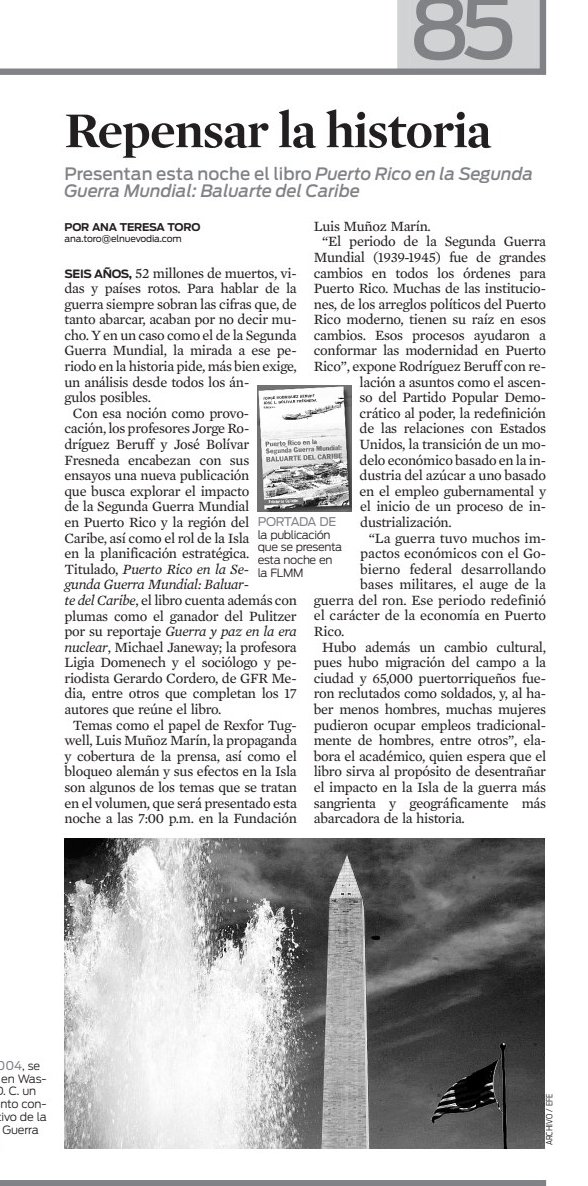
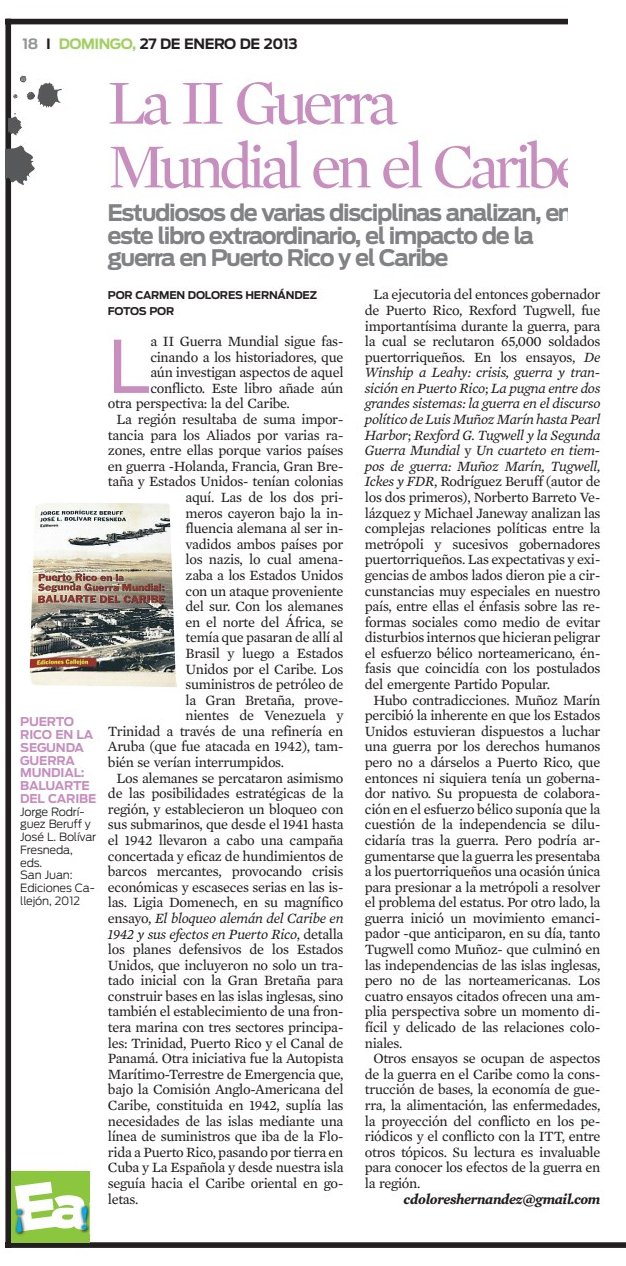
Puerto Rico en la Segunda Guerra Mundial: Baluarte del Caribe

Puerto Rico en la Segunda Guerra Mundial: Baluarte del Caribe

A collection of works by seventeen researchers, each offering distinct perspectives on the international context, military planning, high-level politics, and economic changes in Puerto Rico during the Second World War.
Puerto Rico en la Segunda Guerra Mundial: El escenario regional

Puerto Rico en la Segunda Guerra Mundial: El escenario regional

The second volume of Puerto Rico en la Segunda Guerra Mundial: El escenario regional adds eighteen original and thoroughly researched articles to the seventeen published in the first volume. All told 32 authors with unique backgrounds and perspectives, coming from Puerto Rico, Cuba, the Dominican Republic and the United States, have contributed 35 essays to both publications. This volume highlights four themes: the Caribbean scenario during the Second World War, the social impact of the war on Puerto Rico, the militarization of Puerto Rico, and cultural aspects related to the war effort.
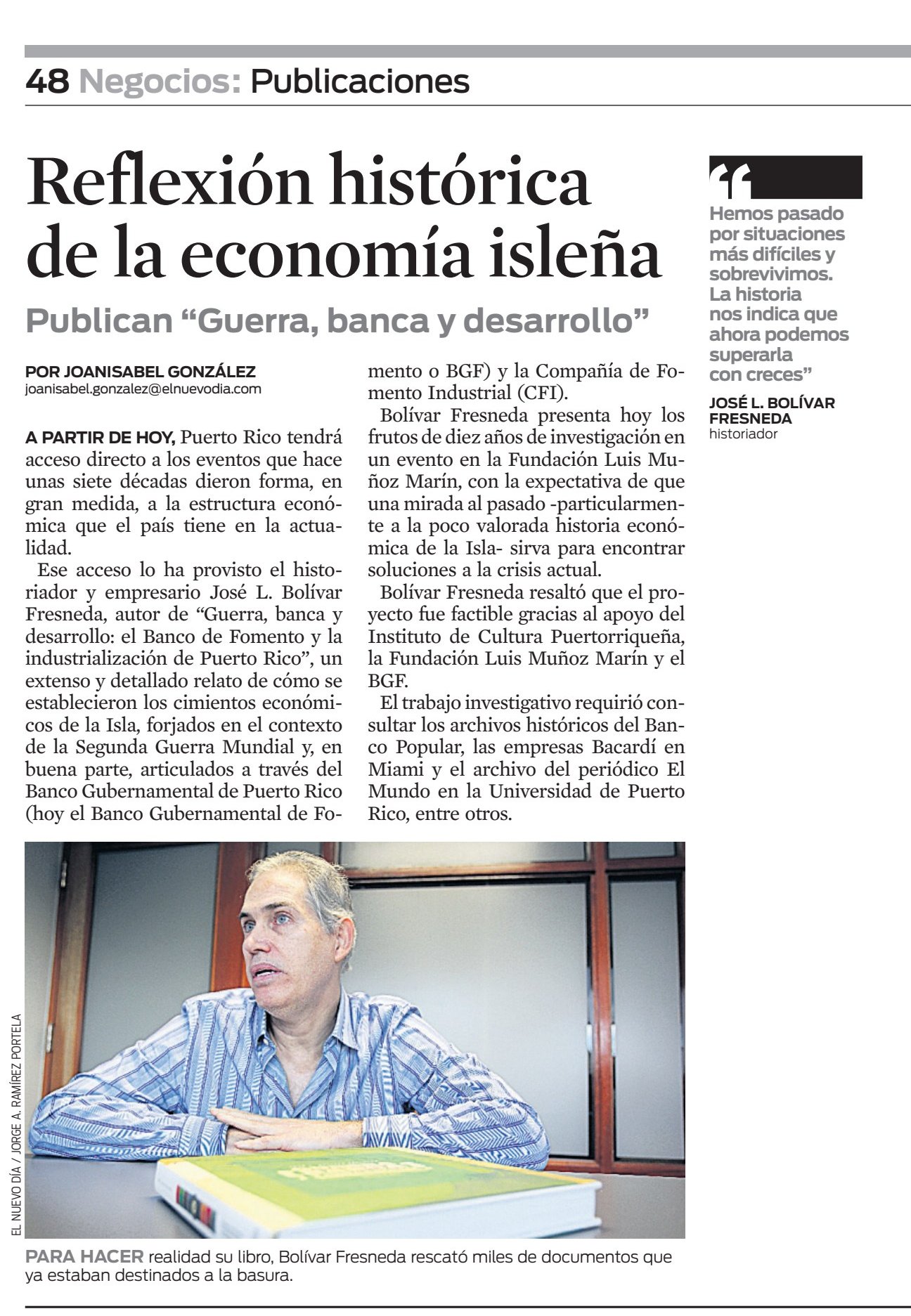
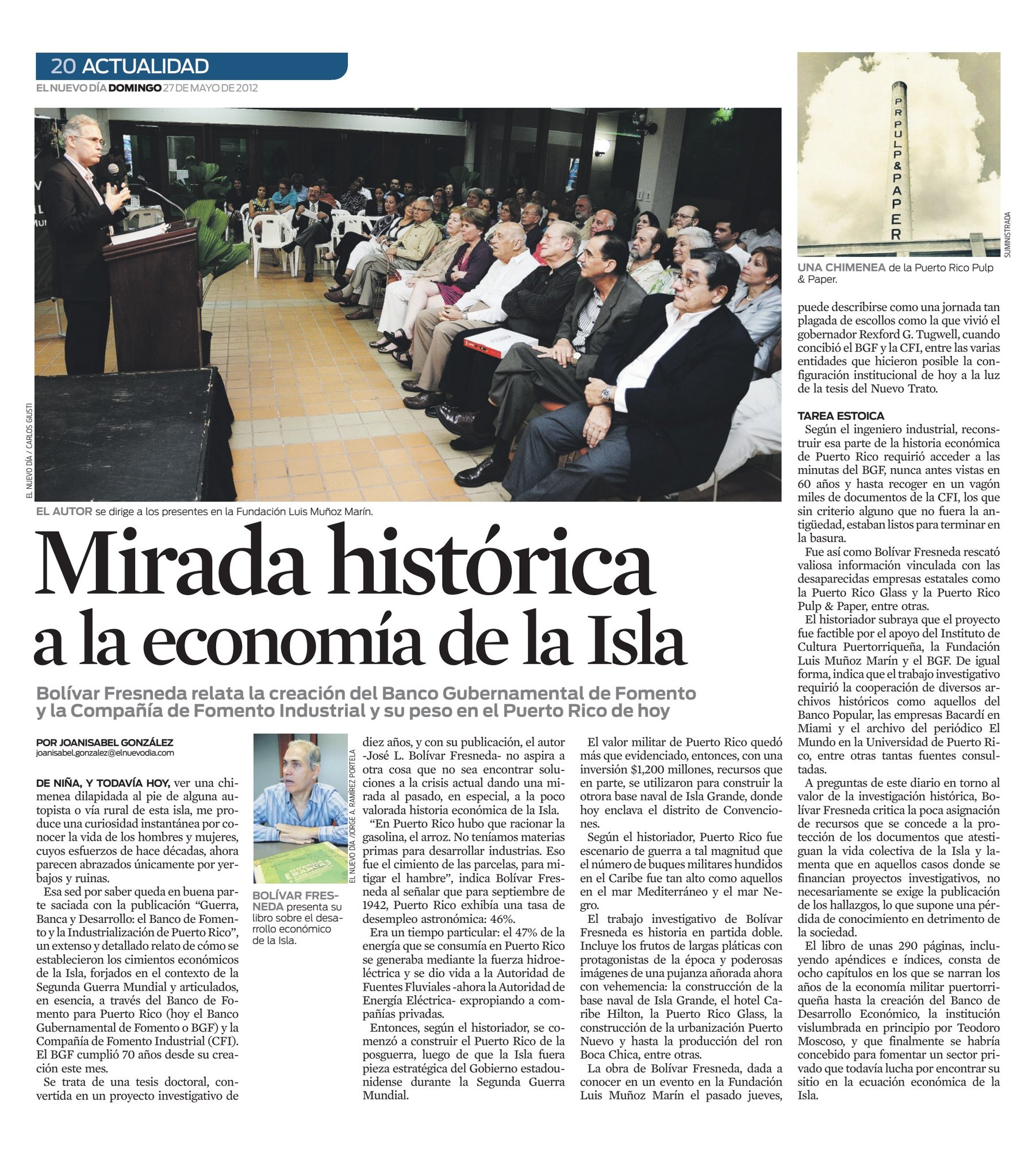
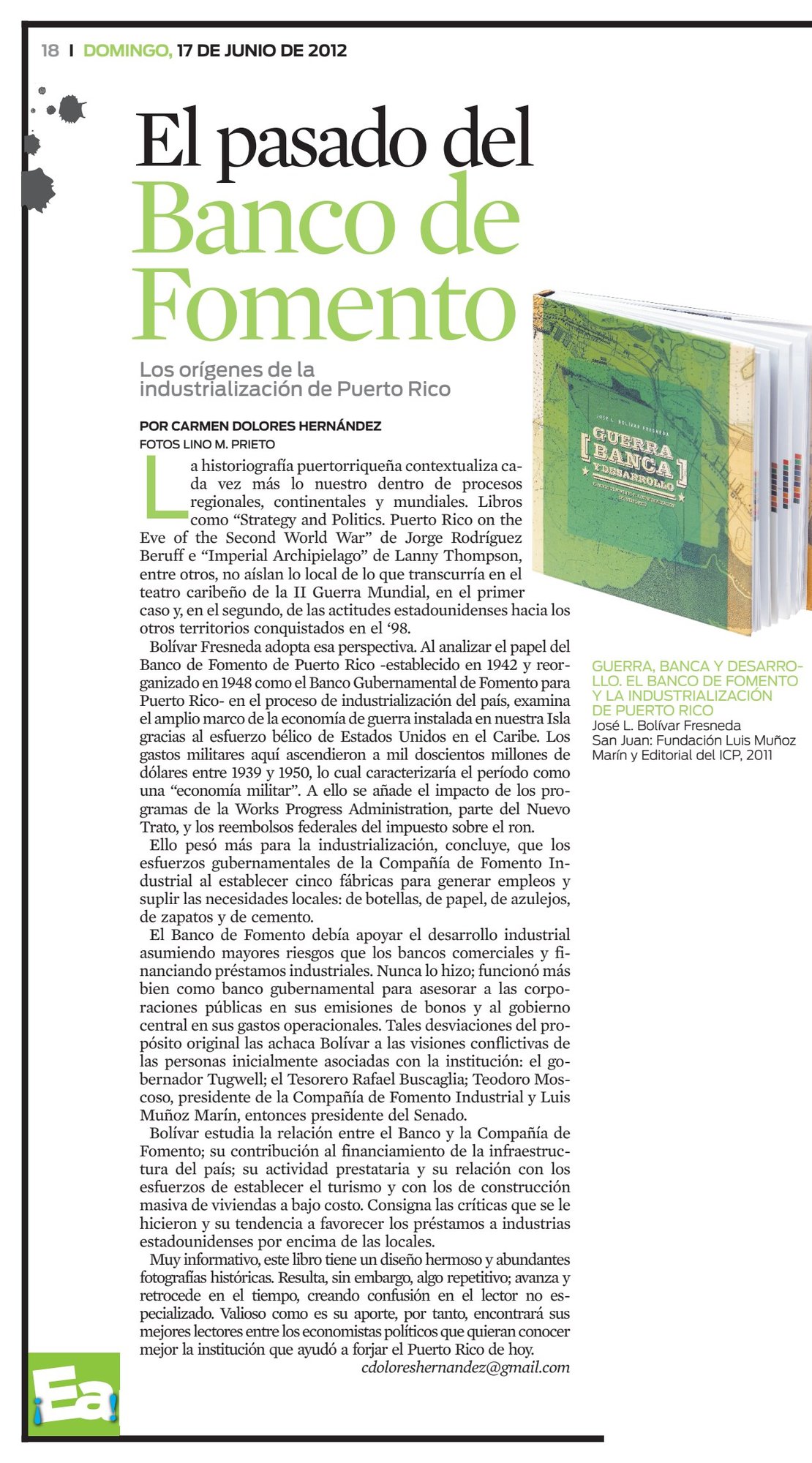
Guerra, banca y desarrollo: El Banco de Fomento y la Industrialización de Puerto Rico

Guerra, banca y desarrollo: El Banco de Fomento y la Industrialización de Puerto Rico

This outstanding publication includes over 300 images, such as maps, graphs, and rarely seen historical photographs related to the socio-economic development of the Island during the World War II era. Guerra, banca y desarrollo has already become essential reading for understanding Puerto Rico’s transformation process during the challenging decade of the 1940s. The book illustrates how World War II served as a catalyst for a multitude of institutional innovations in Puerto Rico. Many of the entities created during this period became permanent and shaped the country’s economic course for decades—some even to this day.
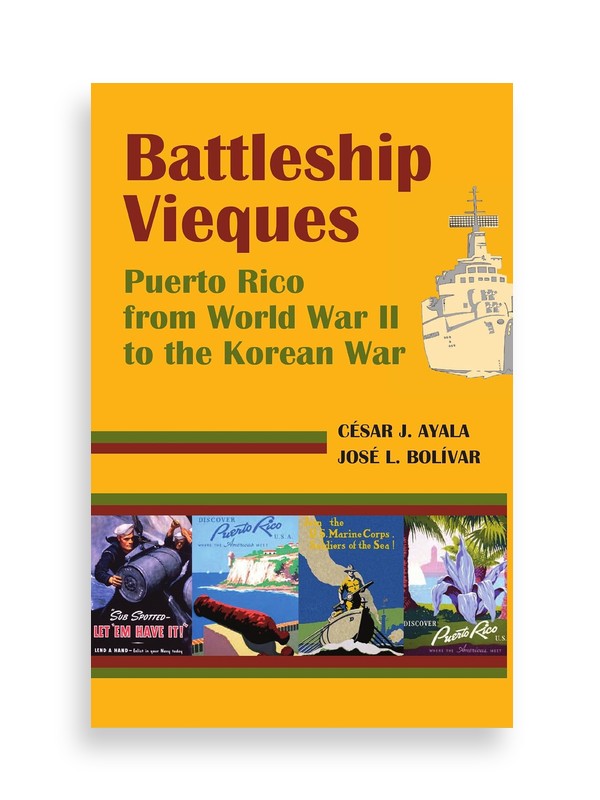
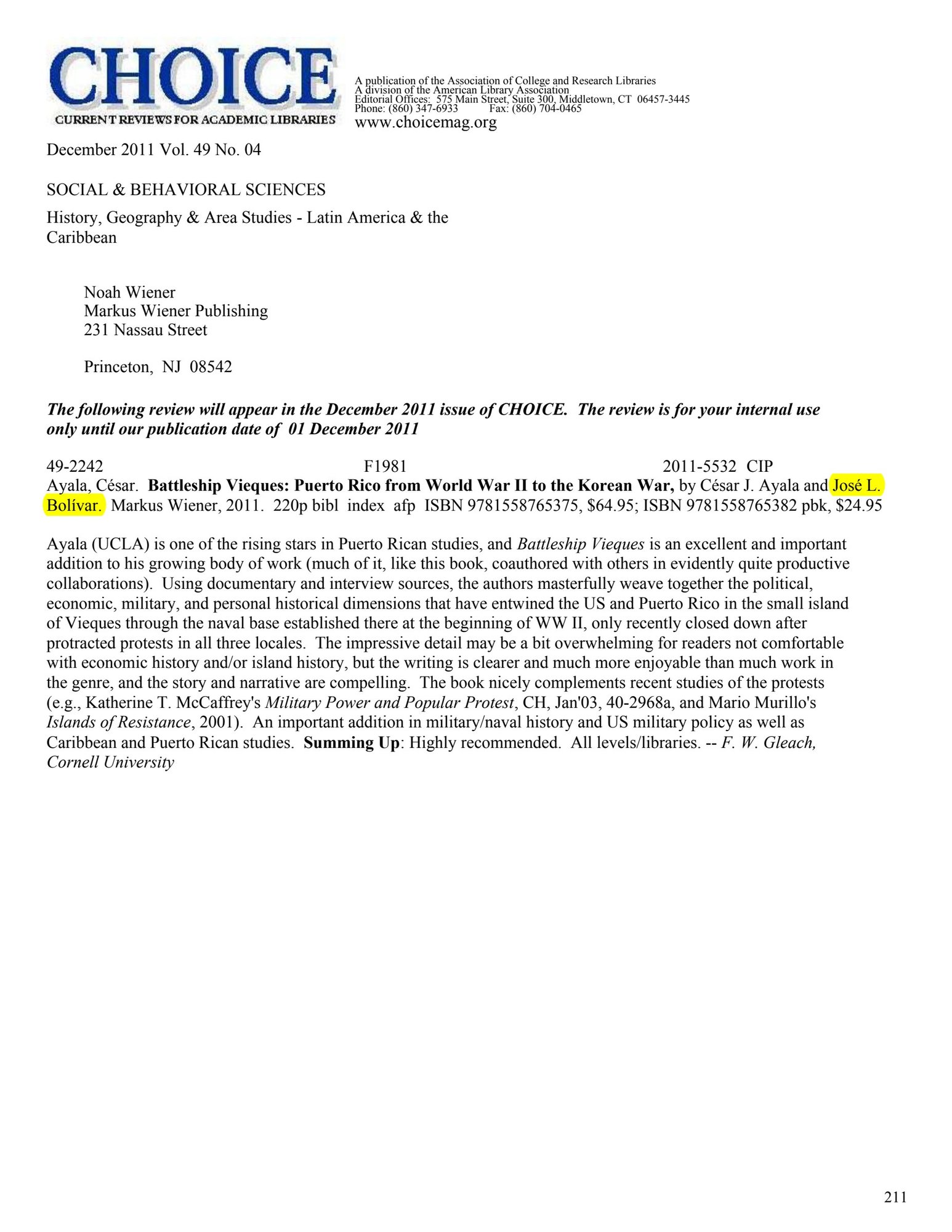
Battleship Vieques: Puerto Rico from World War II to the Korean War

Battleship Vieques: Puerto Rico from World War II to the Korean War

Battleship Vieques details the establishment of the U.S. Navy in Vieques, Puerto Rico, from the beginning of World War II to the U.S. war in Korea. It examines the transformation of local society and economy in Vieques under the impact of the acquisition by the navy of roughly two thirds of the land of the island. The land grab by the navy was followed by the relocation of the population to the central part of Vieques, by considerable disruption of the local economy, and by the disconnection of Vieques from the main thrust of the historical changes then taking place in the island Puerto Rico. Ironically, this took place in the context of the wave of decolonization sweeping Asia, Africa, and the Caribbean after World War II. The effects of the naval presence were felt long after the Navy exited Vieques in 2003, social upheaval, economic distortions and long-term health related sickness being some of these.
Navegando Contra Viento & Marea Hacia el Futuro

Navegando Contra Viento & Marea Hacia el Futuro

By Guillermo A. Baralt, in collaboration with José L. Bolívar
This book recounts the founding and evolution of the Puerto Rico Manufacturers Association, while also examining the economic, social, political, and institutional forces that both supported and challenged its development. By tracing the Association’s ups and downs, the narrative sheds light on a broader chapter of Puerto Rican and U.S. history throughout the twentieth and early twenty-first centuries. More than a corporate chronicle, it is a social history interwoven with themes of commerce, industry, economy, and politics—contributing to the often-overlooked “public history” of Puerto Rico.